AmericanCowman.com: Timely, practical production and management strategies that will add efficiency, value, and profitability to cattle herds with up to 100 head.


    Home  

    Market Research  

    For Advertisers  

    Rent Our Lists  

    About Us/Contact Us  

2005 Corn Weed Control Guide

Weeds (select up to 3)


Application Time

Sponsored by
Syngenta Crop Protection


2005 Soybean Weed Control Guide

Weeds (select up to 4)


Application Time

Sponsored by
UPI


         Subscribe in NewsGator Online   Subscribe in Bloglines

Climate change winners

Dec 1, 2006 12:00 PM
David Hest


If climate changes that are predicted as a result of global warming turn out to be true, the U.S. Corn Belt will be one of the winners in a world where many agricultural regions will decline. But climate change will still present challenges for Corn Belt farmers, even though the region as a whole will retain its advantaged position for producing corn and soybeans.

A book titled Effects of Climate Change and Variability on Agricultural Production Systems, edited by Purdue University agricultural economist Otto Doering and several others, looks at the implications of global warming on crop production across the Central Corn Belt through about 2060. The researchers conclude that corn, soybeans and winter wheat will continue to be the major crops grown in the Central Corn Belt. They expect farmers to manipulate crop maturities, planting dates and rotations with changes in the growing environment. States included in the study were Illinois, Indiana, Ohio, Michigan and Wisconsin.

The researchers used two climate change models to evaluate the potential effects of environmental changes. For simplicity, projected yield changes from only one of the models are reported here.

  1. Northern Corn Belt

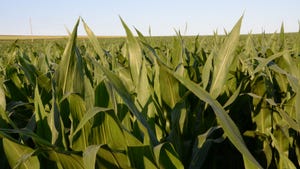
    The climate change model predicts that corn yields from full-season hybrids will increase up to 45% compared with current yields in parts of the Northern Corn Belt. In other parts of the region, corn yields will remain relatively flat.

    The study projects soybean yields from full-season varieties to climb 20 to 50%. Winter wheat yields will almost double, although they will still be lower than yields farther south in the Corn Belt.

    An economic analysis shows that a corn-soybean rotation will continue to dominate in most parts of the region, although soybeans could play a stronger role. Overall, economic returns could go up $50 to $100/acre because of higher productivity.

  2. Midsection Corn Belt

    The model predicts that corn yields from full-season hybrids will hold their own at best and could fall 45% compared to current yields in parts of the midsection of the Corn Belt (central Illinois and central Indiana). It projects soybean yields from full-season varieties to climb 10 to 50% and winter wheat yields to go up 50 to 100%.

    An economic analysis shows that, despite higher winter wheat yields, a corn-soybean rotation could crowd out the limited winter wheat now grown in the region. Average returns could hold at today's levels, or be up slightly.

  3. Southern Corn Belt

    The study predicts that corn yields from full-season hybrids could fall up to 30% compared with current yields across much of the region as daily maximum temperatures begin to resemble those of states to the south, where corn is less productive. Soybean yields from full-season varieties could climb 10 to 30% across much of the region. Winter wheat yields could be up 10 to 20%.

An economic analysis shows that a corn-soybean rotation could nearly crowd out winter wheat. At best, average returns are projected to hold at today's levels or could fall about $30/acre.


SEFP ATE


Related Stories

BREAKING NEWS
Low Foam Technology Syngenta announces that new Touchdown Total herbicide with Low Foam Technology reduces foaming during mixing and tank fill. Low Foam


CROPS
Arrow herbicide Makhteshim Agan of North America (MANA) introduces Arrow herbicide, the first generic clethodim, which can be used for eliminating the


PRODUCTS
New fertilizer grades Honeywell has launched two new grades of Sulf-N ammonium sulfate (21-0-0-24S) and improved quality specifications and supply for


Pollen blocker
HOEGEMEYER HYBRIDS, a regional seed company based in Hooper, NE, appears to have found a way to prevent cross contamination of pollen from genetically


Stacks flood seed market
SEED COMPANIES recently announced the release of their new 2006 corn hybrids and soybean varieties. Technology traits continue to dominate the market,


Atrazine adjustments
FOR GROWERS concerned with using atrazine to control weeds on sensitive watersheds, management alternatives are plentiful, says Bill Johnson, Purdue University


Q&A
DAN TOWERY created Ag Conservation Solutions, an ag consulting business, in January 2005, after working 25 years with the USDA Natural Resources Conservation


New products from Garst
GARST SEED Company, based in Slater, IA, offers 31 new corn hybrids and 18 new soybean varieties for 2006. Nine of the new hybrids contain Agrisure traits,


Less chemistry, more biotechnology
BY NOW, it's no surprise to most agricultural retailers that few new herbicides are entering the corn and soybean marketplace. Because new product development


Highlights from Louisville farm show
THE NATIONAL Farm Machinery Show held February 15-18 in Louisville, KY, had a record-setting attendance year, with more than 312,000 people visiting the


Interactive Web site
DOW AGROSCIENCES has developed an interactive Web site to help show corn growers how soil-applied herbicides can benefit corn weed-control systems. Visitors


Grain storage spillover
LIKE MANY grain-handling businesses, Buckingham Cooperative, near Waterloo, IA, needed to react quickly last year to find enough storage space to accommodate


Smart nitrogen advances
If David Hodges' experience with marketing Agrium's ESN (Environmentally Smart Nitrogen) fertilizer in 2006 is any indication, sales of the polymer-coated


The well-appointed Seed portfolio
Not Unlike clothing stores attuned to the latest fashions, ag retailers will be carrying certain must-have seed and seed accessories for spring 2007.


Sensing direction
Dryland corn farmers looking for a way to protect water quality and optimize nitrogen (N) applications can now find help through a variety of commercial


BT breakdowns
Corn growers may never find a method to control corn rootworms with 100% effectiveness. Even Bt rootworm hybrids sometimes stumble in their attempts


Questions about seed treatment
High-Rate Insecticidal seed treatments typically perform poorly where corn rootworm populations are plentiful, warn extension entomologists from several


Hybrids for high-temp drying
RESEARCHERS AT the University of Illinois have found that different hybrids handle drying at high temperatures better than others. The researchers found


The adjuvant advantage
MORE THAN 4,000 adjuvants are on the market today to help improve a herbicide's performance. Bryan Young, associate professor of weed science at Southern


Tougher beans
STEVE HENRY, who farms near Nevada, IA, is trying to learn everything he can about Sudden Death Syndrome (SDS). However, he's frustrated with the lack


Scout for western bean cutworm
WESTERN BEAN cutworms (WBCs) have been a problem in the western Corn Belt since the 1940s and last year were discovered to have migrated further east


Double-crossed
CORN MIGHT not be the only hybrid farmers find in their fields. While corn breeders have been making strides since they first hybridized corn in the '30s,


Prevent rust in nurse tanks
IF YOU test your company's nurse tanks, remember to put ammonia back into the tanks as soon as possible to prevent the inside of the tank from rusting,


NH3 nurse tank data plates
THE AGRIBUSINESS Association of Iowa (AAI) has provided updated information on how to keep NH3 nurse tanks in service if the tanks' ASME data plates are


Assessment tool
The Illinois Fertilizer and Chemical Association (IFCA) has a good tool to help ag retailers ensure that they are complying with regulatory requirements


License plate enforcement
The state of Illinois recently announced that it will more uniformly enforce the requirement for fertilizer wagons to have license plates


Watchful waiting
While U.S. soybean growers' attitudes about Asian soybean rust (ASR) range from concern to near panic, it is not a new threat to many soybean growers


New calcium products
ProfitPro, Albert Lea, MN, introduces two new proprietary calcium products SoilCal and PlantCal. According to the company, SoilCal conditions the soil


Rubber track undercarriages
New design increases track longevity LANDLUVR SYSTEMS offers rubber track undercarriages for pulled equipment such as auger carts, sprayers, spreaders,


Weed control in small grains
TWO NEW broadleaf weed herbicides geared to wheat and other small grains will be available for growers this spring. CleanWave and Starane NXTcp herbicides

 
Back to Top


Key:    Paid Content      Enhanced for the Web

Contact Us  For Advertisers  For Search Partners  Privacy Policy  Subscribe
© 2007 Penton Media, Inc. All rights reserved.