AmericanCowman.com: Timely, practical production and management strategies that will add efficiency, value, and profitability to cattle herds with up to 100 head.


    Home  

    Market Research  

    For Advertisers  

    Rent Our Lists  

    About Us/Contact Us  

2005 Corn Weed Control Guide

Weeds (select up to 3)


Application Time

Sponsored by
Syngenta Crop Protection


2005 Soybean Weed Control Guide

Weeds (select up to 4)


Application Time

Sponsored by
UPI


         Subscribe in NewsGator Online   Subscribe in Bloglines

Combatting cheatgrass

May 1, 2004 12:00 PM
by Shane Novacek


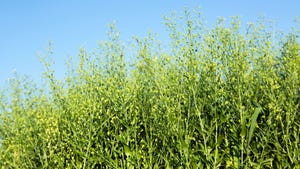
Farmers, ranchers and ecologists consider cheatgrass, also known as downy brome, to be one of the greatest threats to Western rangeland. However, to Dean McClain of Ag Flyers in Torrington, WY, cheatgrass represents a vast new business opportunity.

Cheatgrass offers little or no nutritional value for livestock and can injure the mouths and digestive tracts of cattle, resulting in reduced feed intake and weight loss. Because cheatgrass tends to extract higher levels of moisture and nutrients from the soil than desired species do, cheatgrass in cropland can easily reduce yields.

Potentially the greatest negative effect of cheatgrass is its tendency to burn rapidly and often. Because cheatgrass dries four to six weeks earlier than native perennials and is susceptible to fire one to two months longer in the fall, it is the primary source of major fires throughout the West each year. According to the U.S. Forest Service, wildfires in the U.S. in 2002 killed 23 firefighters, destroyed 815 homes, burned 7,000,000 acres of trees and cost taxpayers $1.6 billion to suppress.

Solution to the cheatgrass problem

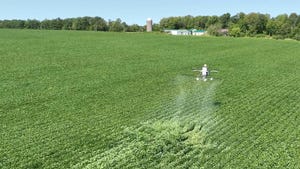
The invasive cheatgrass is no stranger to Torrington, WY. McClain, who has decades of aerial spraying experience, knows cheatgrass well and how to fight it.

McClain started his work in the cheatgrass market 10 years ago by spraying research test plots for the University of Wyoming. Like many agricultural aviators, McClain has his busiest time in the spring. That's when he's attending to the needs of his corn and dry bean growers. Given the irregularity of weather conditions at that time of year, getting all his crop applications completed in time means long days as he moves from field to field. This often unpredictable period of time leaves McClain little room to expand or develop new business opportunities.

Cheatgrass offers McClain the opportunity to expand his application season beyond the spring and early summer, thereby boosting his overall business volume and revenue. According to university tests, cheatgrass can be sprayed in the spring, but better control is achievable in the late summer and early fall. McClain uses a selective herbicide from BASF called Plateau herbicide. “According to the label guidelines, Plateau can be applied in the late summer or early fall, after we've finished most other crop spraying,” McClain says.

For McClain, spraying the herbicide on cheatgrass represents a significant opportunity to expand his business at a time when demand for aerial applications is light.

“By offering a cheatgrass control program, I'm able to stay in the air for more months of the year,” McClain says. “While regular crop applications still constitute the majority of our work, cheatgrass applications have doubled for us.”

For preemergent spraying in the fall, McClain uses four ounces of product per acre. McClain has tried spring applications but recommends fall application because the cheatgrass suppression rate is better.

Solid results

In 2002 McClain assisted the Wyoming Game and Fish Department with several cheatgrass control projects. He also made applications for some of his regular crop customers who wanted the product sprayed on new grass seedings as part of federal Conservation Reserve Program (CRP) projects to take crops out of rotation for 10 years and restore highly erodible farmland.

“As more cropland is converted to CRP grasslands and irrigated grass pastures are becoming more common in this part of Wyoming, I think there will be a steady progression in the number of cheatgrass-related jobs,” McClain says.

McClain anticipates that within the next five years efforts to control cheatgrass will intensify, as awareness grows that it can be successfully controlled using a selective herbicide. In his case, he expects it may become as much as 10% of his business.

“Right now cheatgrass suppression is an emerging market,” McClain says. “As farmers, ranchers and government agencies become more aware of the cheatgrass problem, I expect that Plateau treatments will be in much higher demand.”

Over time, the ability to successfully control cheatgrass also provides aerial applicators like McClain with the opportunity to promote their positive contribution to the environment, helping to stop the spread of cheatgrass and restore rangeland habitat to a more desirable condition.

“We need some good publicity that shows that our efforts are valued and that we're an important part of our communities,” McClain says. “I think efforts to help restore native ecosystems and reduce the risk to life and property from cheatgrass fires will make a significant difference.”

Shane Novacek works in account management at Padilla, Spear, Beardsley Inc.


SEFP ATE


Back to Top


Key:    Paid Content      Enhanced for the Web

Contact Us  For Advertisers  For Search Partners  Privacy Policy  Subscribe
© 2007 Penton Media, Inc. All rights reserved.