![]() |
||||
|
|
||||
|
|
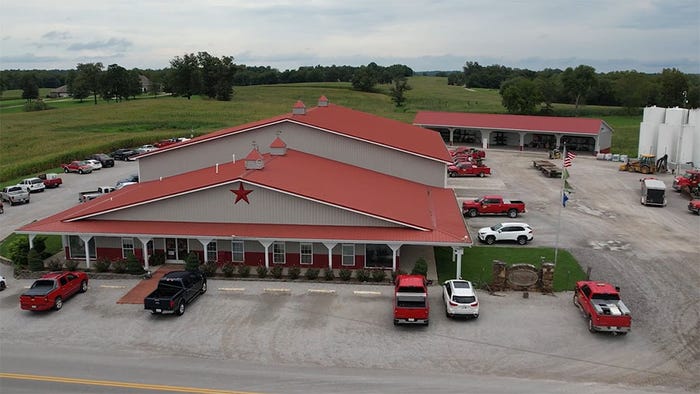
Everything's going into seed Sep 1, 2004 12:00 PM by Lynn Grooms “More and more … everything's going into seed,” says Shane Freese, Croplan Genetics district sales manager and seed division manager at Watonwan Farm Service (WFS) in Truman, MN. That's why the full-service cooperative, while having sold seed since its formation in 1937, has ramped up its seed division in the last five years. As biotechnology has advanced, ag retailers have seen herbicides and insecticides evolve — from chemical compounds to genetic traits in the plants themselves. Although crop protection products are still in good demand, ag retailers like WFS are seeing herbicide-resistant and insect-protected seeds represent an increasing percentage of sales. What hasn't changed, however, is competition. As seed makes up a greater proportion of both the grower's and retailer's costs and profits, the retailers getting the most seed business will likely be those that provide the best value for the dollar. That's where “genetics, placement and people” count. In fact, those are the three words Freese would choose if given only three to promote WFS's seed business to customers. Genetics With NK Brand, Croplan Genetics and Monsanto brand seed, WFS offers diverse genetics for the typical range of conditions found in its seven-county area, Freese says. Knowing the strengths of each hybrid enables WFS to make the best recommendations for each situation. “We haven't added more brands because we don't feel they are needed,” Freese says. “You can end up doing the co-op and the customer a disservice if you try to handle too many seed brands.” He adds that the cooperative's agronomists and salespeople spend a lot of time in the field. This enables them to stay current on how their products (and competitive products) are performing, and it lets them see what's coming next. With time in the field, personnel have a good working knowledge of a new hybrid's characteristics and performance, Freese says. Placement To help customers optimize crop performance, WFS also focuses on proper seed placement using site-specific technology. It has used the SST agricultural information management system, and two years ago it enhanced the GIS data processing system with the Advanced Yield Analysis Program. WFS collects field information (on fertility, soil types, and hybrid or variety performance, for example) using the technology and then interprets the information to help growers identify trends. WFS agronomists and salespeople have long made recommendations about what they thought was the right choice in particular soil environments. With the site-specific tools, they can now support those recommendations with technology-generated data. The cooperative's research plot program, which includes four plots on the outer edges of its trade territory as well as one in the center, also is designed to help identify trends and consistency among hybrids and varieties. These plots are located in high-yield areas as well as in more demanding soil environments, Freese says. People Studying these plots, site-specific data and genetics, and putting them to work for growers, are WFS's employees. To grow their seed businesses, ag retailers need people who spend time in the field to gain knowledge about their products, have good sales skills, and, most importantly, are committed to making the grower more profitable, Freese says. The “genetics, placement and people” emphasis appears to be working for WFS. In the last three years, the cooperative has enjoyed significant growth in its seed corn business. With such growth, it's not hard to believe Freese when he says, “We thoroughly enjoy the seed business.” |
|
||||||||||||||||||||||||||||||
| Back to Top |