![]() |
||||
|
|
||||
|
|
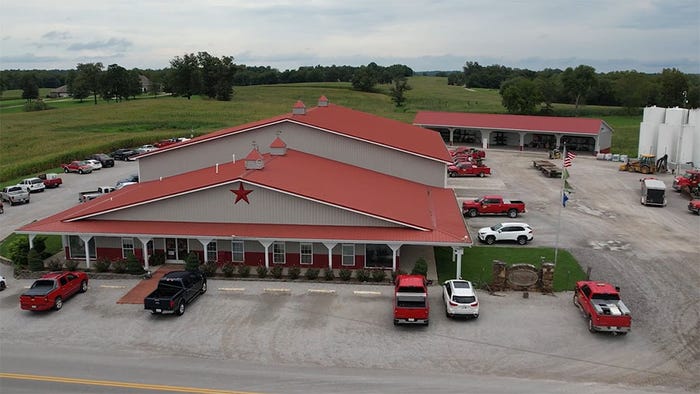
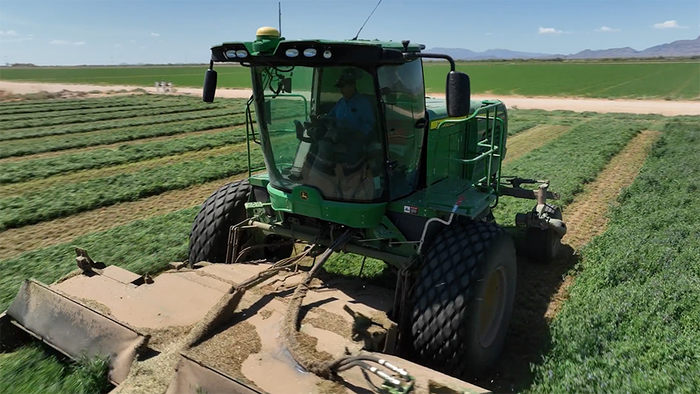
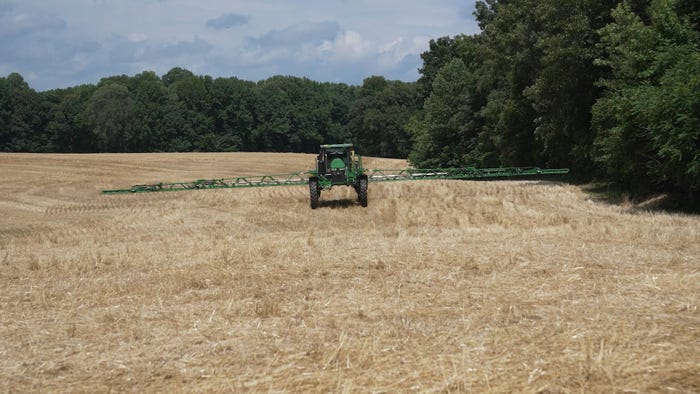
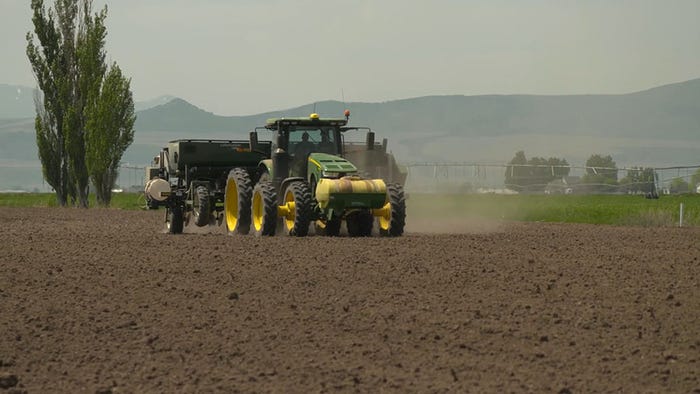
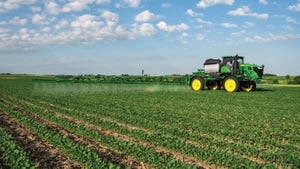
By the numbers Feb 1, 2007 12:00 PM By David Hest Doug McDevitt manages by the numbers as he guides a 150-employee, $80 million agronomy operation that custom-applied fertilizer and crop protection products on 1.3 million acres in 2006. And the numbers tell the story. Over the past five years at Effingham Equity, an 11-location co-op, the average number of acres sprayed per machine has climbed 23%. Meanwhile, sprayed acres are up 12% to about 700,000 acres. Dry fertilizer application acres have climbed more than 20% to 500,000 acres. And custom application of anhydrous ammonia jumped 200% to 110,000 acres. These gains have helped Effingham Equity cope with higher costs and intensified marketplace pressures, says McDevitt, who is crop production manager for the operation. The co-op operates in a 3-million-acre marketplace in south-central Illinois. The cost side of the business has not been a pretty picture of late for Effingham Equity, or for anyone else in the business, McDevitt notes. “Energy cost increases of $200,000 for fuel for our machines in 2006 were not in our budget,” he says. “Chinese and world demand for steel has increased the cost of acquiring equipment. Labor cost to attract and retain good people to run this equipment is up. And new-technology costs to improve efficiency and operator comfort are also added to the equation.” The income side has faced pressure as well. “The farmer isn't necessarily willing to pay for these things,” he says bluntly. As he balances the challenges of marshalling higher-cost human and iron resources against an income stream that is highly sensitive to price increases, McDevitt says that tracking the number of acres and hours per machine and per operator has helped guide the way to a solution to the financial puzzle — namely, higher efficiency. The efficiency riddle “We know the productivity of each machine,” he says. “Based on that, we have seen that some machines aren't used enough.” In recent years, that analysis has led the co-op to reconfigure its equipment lineup and to make changes to existing machines to get more work out of them. For example, as more customers adopted Roundup Ready crops, the co-op found that its four-wheel floaters were being used less for preplant applications. In reaction, it replaced a number of smaller trucks with three-wheel floaters equipped with both dry and spray beds to get double duty from them. In total, the co-op has reduced the number of floaters from 23 to 15 in the past five years. “If you don't know the productivity of each machine, you don't know what machine needs to be replaced or eliminated,” McDevitt says. Over the same time period, the co-op's high-clearance sprayer lineup has grown from 31 to 38 machines. As it expanded the machine count, Effingham Equity also analyzed utilization and came up with a plan to treat more acres per machine. “Rather than utilizing those machines just for in-crop post-application, we bought floater tires to allow preplant applications,” McDevitt says. “And fall application of herbicides is becoming more popular, too. Being able to utilize these machines more is important. They were sitting idle too much.” Adding to the co-op's tender and nurse truck fleet also was critical to improved efficiency. For example, since 2000, it has increased the number of liquid tender units from 48 to about 60. “Tendering equipment is critical,” McDevitt says. “The guy with the application rig in the field can't wait for product.” The impact of these changes has been substantial. In 2006, each spray rig covered nearly 12,000 acres. Five years before, on average each rig sprayed only 9,500 acres. New technology Keeping track of efficiency by machine also helps the co-op assess the potential value of equipment upgrades and new technology. For example, the co-op is in the process of comparing the efficiency of sprayers with 90- and 100-ft. booms. “Depending on average field sizes, we can see differences between branches that have wider or narrower booms,” he says. “It definitely helps our efficiency where we can support 100-ft. booms.” Lightbars on spray rigs have proved to be a cost-effective way to improve efficiency, but the jury is still out on assisted steering. “Lightbars have increased our accuracy and the quality of the job we do,” McDevitt says. “We are testing autosteer at one of our locations, but we have not adopted that widespread. We are not convinced yet that the $12,000 to $15,000 cost per unit will give us that much more efficiency. “We draw the line on some of these things,” he continues. “We ask ourselves whether farmers will pay more or whether it will make us more productive. So we have been slow to adopt some technologies.” A new enterprise Attention to numbers also has helped the co-op build a new custom application enterprise. Until about a half dozen years ago, most of its locations rented toolbars to farmers to apply anhydrous ammonia. It decided to test market a full custom application service at one location, then expanded the service to other locations based on the success of the pilot test. “Business just exploded,” McDevitt says. “A majority of our ammonia is applied in the spring. Most guys realize that when it is dry enough to apply anhydrous ammonia, they should be focusing on planting.” Five years ago, the co-op custom-applied anhydrous on about 54,000 acres. In 2006, the acreage count was 110,000 acres. “We found it was more cost-effective and efficient to custom-apply anhydrous ammonia with our larger rigs rather than rent the equipment to farmers,” he adds. “We are pulling that same toolbar through five times the acreage than if we rented it to customers. When a farmer gets that toolbar, he doesn't use it as efficiently. It sometimes gets parked in the yard. This has cut our equipment cost tremendously.” Maintenance costs Having a good handle on machine acreage also helps the co-op run a tight maintenance program, which helps avoid in-season downtime. To simplify maintenance, it limits the number of application machinery brands it uses. High-clearance sprayers are about evenly divided between AgChem RoGators and John Deere 4700 series sprayers. The floater lineup is dominated by TerraGators. Limiting the number of brands helps the co-op manage its parts inventory efficiently and improves preventive maintenance. “Our maintenance manager knows what issues we will have once we get a track record with a particular machine,” McDevitt says. “We can anticipate problems, so we can take care of them before they occur in the field.” Top operators Tracking acreage by machine operator also helpsMcDevitt identify and nurture top employees. “This helps us evaluate employees, to see who is more productive,” he says. “You have got to have the right people to make a custom application business work. Sometimes field sizes explain differences. Sometimes it points out training needs.” To help build an efficient custom application workforce, the co-op keeps operators on the payroll year-round. Operators are assigned to specific machines. “If they stay with the same machine, they take ownership, and the machines last longer and have less downtime,” McDevitt says. “When they aren't spraying, they are out scouting fields or are engaged in maintenance and other customer-related activities. We have the quality of people who can be productive year-round.” Growing in the future McDevitt is hopeful that recent growth trends in the co-op's custom application business will continue — and that efficiency gains will bolster the bottom line. Growth in recent years has come despite what McDevitt calls a “small trend” in the co-op's trade area for more farmers to take on their own spraying chores. Across the co-op's 11 branches, the percentage of custom-applied acres ranges from 50% or less, to as high as 75%, with an average of about 65%. Some farmers who feared the spread of Asian soybean rust bought their own sprayers. “We have farmers who have purchased sprayers who found out spraying isn't always fun and it adds additional liability,” McDevitt notes. “One thing that has surprised us some: We thought that larger producers might be more likely to buy their own rigs. But while they have gotten larger, their labor pool hasn't. So they need more services. There is still plenty of opportunity for retailers such as us.” |
|
||||||||||||||||||||||||||||||||||||||||||||||
| Back to Top |