![]() |
||||
|
|
||||
|
|
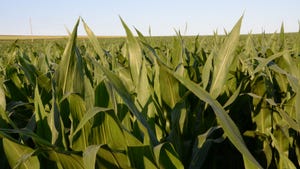
Smart nitrogen advances Oct 1, 2006 12:00 PM By David Hest If David Hodges' experience with marketing Agrium's ESN (Environmentally Smart Nitrogen) fertilizer in 2006 is any indication, sales of the polymer-coated controlled-release fertilizer are about to take off. This spring, sales of ESN at the Crop Production Services (CPS) location Hodges manages in Oskaloosa, IA, climbed about 10-fold to 250 tons compared to the previous year. “This year is the first year it has taken off,” he says. “It really mushroomed.” That's despite a 15 to 20% premium over prices for uncoated urea fertilizers, which climbed to record sales levels themselves. “When it came into play that ESN would be there when the corn plant needed it, the price wasn't a problem for the farmers who were concerned about potential N losses,” Hodges says. Officials from Agrium, the manufacturer of ESN and CPS's owner, aren't predicting that sales will jump that much in the near future. But the company's recent completion of a new manufacturing facility in Carseland, Alberta, underscores the company's optimism about the future of ESN. The new facility increases Agrium's annual ESN production capacity from about 30,000 to 150,000 metric tons. The company also has announced plans for ESN storage depots in Homestead, NE, and Toledo, OH, and is considering locations in Illinois and Indiana. “One hundred fifty thousand [metric] tons is really only enough to begin testing the market,” says Murray Hasinoff, director of diversified products for Agrium. In the long term, the company hopes that ESN will have a fit on about 20% of U.S. corn acres. That is roughly the percentage of corn ground subject to excessive nitrogen losses from leaching and other factors, Hasinoff says. If Agrium is able to convert that potential into sales, that translates to about 3.5 million metric tons of ESN sales annually. Agrium will consider building coating plants on the Mississippi Gulf or in the heart of the Corn Belt, or both, as the market for ESN expands, he adds. Retail success Although increased ESN supplies in 2007 will allow Agrium to begin marketing it more aggressively, select retailers have been testing the waters for ESN since 2002. That year, it was marketed in select areas in Indiana and Michigan. Since then, ESN availability has been gradually expanded over more of the Corn Belt. Dealerships that haven taken on ESN, most of which carry the CPS banner, have been given limited exclusivity to the coated fertilizer. It also has been available to independent dealers through The Andersons in Indiana and Northern Star Minerals in Michigan and Wisconsin. “We realize that retailers have to put a lot of effort into selling a branded product, so we want to give them a head start,” Hasinoff says. “As demand goes up, we will eventually have to open up distribution of ESN. As we build another two or three coating plants and there is more demand, ESN will be available through more dealers.” In 2006, Hodges had to scurry to fulfill demand for ESN in his southeastern Iowa trade area, after a successful introduction in 2005. “I had to go over to another division to get more product from them,” he says. “Supplies were getting tight.” One of the company's largest customers led the way. After testing ESN in 2005, with positive results, the grower applied ESN on all his corn acres in 2006. The grower applied 100 lbs./acre of nitrogen via anhydrous ammonia in the fall. He followed in the spring with 60 lbs./acre of nitrogen as ESN on fields previously planted to corn, and 30 lbs./acre on fields previously in soybeans — a 10 to 15% rate reduction. “Agrium research shows that we can run with 10% less” nitrogen if the normal fertilizer rate has been at optimum levels, Hodges says. “His corn this year looks like it will hit a home run, though we are in a dry pocket.” Hodges isn't concerned about lower sales volume if ESN allows nitrogen rates to be reduced. “You don't want to over-apply,” he says. “It is fertilizing more efficiently. This year, with the high input costs, a lot of growers cut back anyway.” Other customers relied solely on ESN for corn nitrogen fertilization, both on river bottom acres subject to higher nitrogen leaching and on fields less prone to losses. Some customers applied ESN on pasture and hay ground as well. “They knew the N would be there when the forage needed it,” Hodges says. In total, ESN made up about 70% of the dealership's urea sales, which were up this year, in part because it no longer sells ammonium nitrate. Hodges credits ESN for attracting several new customers, which he estimates were responsible for a 1 to 2% increase in sales of fertilizer, crop protection products and other inputs. “Any time you have a product that your competitors don't have, it puts you in the driver's seat and makes you more appealing to the customer,” he says. Long term, he expects fields that are prone to nitrogen losses to be an important driver for ESN sales in his market area, given the price spread between ESN and urea. “ESN will be looked at more and more because of water-quality issues,” he predicts. “As far as a total program for ground without a big danger of N loss, the price gap will have to get closer. It is going to be [dictated by] dollars and cents, and the relative efficiencies of the nitrogen products.” Corn Belt and beyond Agrium's Hasinoff concurs that the best agronomic fit for ESN in the Corn Belt is on acres subject to nitrogen losses. “ESN is not for everybody,” he says. “If you don't have nitrogen loss, ESN may not provide a benefit. What we are trying to do is focus on watersheds where there are nitrogen loss problems.” He notes that USDA Natural Resources Conservation Service (NRCS) best management practices recognize controlled-release fertilizers, as well as urease and nitrification inhibitors, which should encourage their adoption in sensitive areas. Agrium also is conducting research on use of ESN in crops other than corn, including cotton, rice, winter and spring wheat, grasses and potatoes. In some crops, Hasinoff expects ESN to be used in programs with other nitrogen fertilizer forms, either as sequential applications or in blends. In wheat, for example, a blend with a nitrogen form that is available at temperatures lower than the 50° release point for ESN might be beneficial. Similarly, in grass and forage crops, an ESN blend may be a good replacement for ammonium nitrate, which is becoming less available because of safety and security concerns. Agrium also will be testing international markets, including Europe and Asia. The science behind ESN ESN (Environmentally Smart Nitrogen) is a urea fertilizer coated with a patented polymer membrane that increases the release of nitrogen as soil temperature goes up. This controlled release protects the nitrogen until close to the time it is used by the crop, according to Agrium, its manufacturer. After ESN is applied to the soil, the polymer allows moisture to permeate each fertilizer capsule. The resulting nitrogen solution moves through the membrane at an increasing rate as the soil temperature climbs above 50° — and matches the demand curve for the crop. According to Agrium, ESN improves nitrogen-use efficiency and may increase corn yields, especially in soils where nitrogen is subject to leaching, volatilization and denitrification. In Agrium and university field trials from 2000 to 2004, corn yields in plots fertilized with ESN were more than 5 bu./acre higher in about half of comparisons with plots fertilized with conventional nitrogen sources and at the same nitrogen rate. Corn yields were similar between plots fertilized with ESN at rates 20 to 25% lower than standard rates and plots fertilized with growers' standard rates of urea-ammonium nitrate (UAN) or conventional urea fertilizer. ESN also produced greater yield stability, with less variability across varying soils and weather, than urea and UAN. In surface application comparisons, ESN and ammonium nitrate performed similarly. This suggests ESN is a good substitute for ammonium nitrate if it is unavailable because of safety and security concerns, the company says. For more information, visit www.agrium.com/ESN. |
|
||||||||||||||||||||||||||||||||||||||||||||||||||||||||||||||||||||||||||||||||||||||||||||||||||||||||||||||||||||||||
| Back to Top |